Quotes about morality
501 quotes from 241 people
 Edmund Burke1729–1797Reflections on the Revolution in France (1790), Volume iii, p. 332
Treat your inferiors as you would be treated by your betters.
 Seneca the Younger5 BC–AD 65Epistulae Morales ad Lucilium (Moral Letters to Lucilius), Letter XLVII: On master and slave, Line 11
No evil can be excused because it is done with a good intention.
 Thomas Aquinas1225–1274On the Ten Commandments (c. 1273), Art. 1
Non-cooperation with evil is as much a duty as is cooperation with good.
 Mahatma Gandhi1869–1948Written statement in trial for sedition, March 1922
I have to live for others and not for myself; that’s middle-class morality.
Iago’s soliloquy—the motive-hunting of a motiveless malignity—how awful it is!
 Samuel Taylor Coleridge1772–1834Lectures and Notes on Shakespeare and Other English Poets (1811–1818), Part II: “The Lectures and Notes of 1818”, Section IV: “Notes on Some Other Plays of Shakespeare”, § “Othello”, p. 388
The ethic of Reverence for Life is the ethic of Love widened into universality.
 Albert Schweitzer1875–1965Out of My Life and Thought (1933), Epilogue, p. 235
God judged it better to bring good out of evil than to suffer no evil to exist.
 Augustine of Hippo354–430Enchiridion (c. 420 ), Ch. 27
Wilt thou seal up the avenues of ill?
Pay every debt as if God wrote the bill. Ralph Waldo Emerson1803–1882May-Day and Other Pieces (1867), Fragment
It is easier to denature plutonium than it is to denature the evil spirit of man.
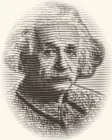 Albert Einstein1879–1955The Real Problem Is in the Hearts of Men, The New York Times Magazine (June 23, 1946)
Wickedness is always easier than virtue; for it takes the short cut to everything.
 Samuel Johnson1709–1784The Journal of a Tour to the Hebrides (1785) (17 September 1773)
The end justifies the means. But what if there never is an end? All we have is means.
 Ursula K. Le Guin1929–2018The Lathe of Heaven (1971), Chapter 6
Evil is unspectacular and always human,
And shares our bed and eats at our own table. W. H. Auden1907–1973Another Time (1940), “People and Places”, XIII: “Herman Melville”
The object of punishment is, prevention from evil; it never can be made impulsive to good.
 Horace Mann1796–1859Lectures on Education (1855), Lecture 7
I have often laughed at the weaklings who thought themselves good because they had no claws.
 Friedrich Nietzsche1844–1900Thus Spoke Zarathustra (1883), Part II, Chapter 13