Graduation quotes
For the card, the toast and the speech
A graduation calls for a few words, and most of us have to borrow them. The same handful of lines turns up on every card in the shop, and a fair number were never said by the person whose name is printed underneath.
These are sorted by what you need them for: a line short enough to write in a card, something with more weight for a speech, something funny for the graduate who has heard enough advice, and a few honest ones about failing, which is the part of the future nobody puts on a banner. Each quote links to its own page, which shows where it comes from.
Short enough for a card
One sentence each, and none of them needs explaining.
The classic for any beginning, and usually printed over the wrong name.
 Helen Keller1880–1968Let Us Have Faith (1940), ch. “Faith Fears Not”, pp. 50–51; repr. in The Open Door (1957)
 Cicero107–43 BC“De Finibus Bonorum et Malorum” Book V, Chapter 58
For a graduate who is worried about starting small.
 Eleanor Roosevelt1884–1962You Learn by Living (1960), p. 29–30
Ah, but a man’s reach should exceed his grasp,
Or what’s a heaven for?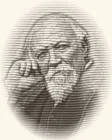 Robert Browning1812–1889Andrea del Sarto (1855), Men and Women (1855), “Andrea del Sarto”, line 98.In context
Two lines of Browning that fit on a gift tag.
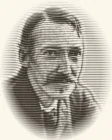 Robert Louis Stevenson1850–1894Virginibus Puerisque and Other Papers (1881), El Dorado.
Never say ‘no’ to adventures. Always say ‘yes’, otherwise you’ll lead a very dull life.
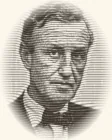 Ian Fleming1908–1964Chitty-Chitty-Bang-Bang (1964), Ch. 2
From a children’s book, which makes it a nice one for a younger graduate.
I’m an idealist. I don’t know where I’m going, but I’m on my way.
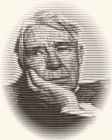 Carl Sandburg1878–1967Incidentals (1904)
For the graduate who would rather not be asked what comes next.
For the road ahead
Longer lines with some weight to them, for a letter or the close of a speech.
From the end of Walden. It works as the last line of a speech with nothing after it.
 Robert Frost1874–1963The Road Not Taken (1915), Mountain Interval (1916, 1920), The Road Not Taken, st. 4In context
Man cannot discover new oceans unless he has the courage to lose sight of the shore.
 André Gide1869–1951One doesn’t discover new lands without consenting to lose sight, for a very long time, of the shore.
To be what we are, and to become what we are capable of becoming, is the only end of life.
Robert Louis Stevenson1850–1894Familiar Studies of Men and Books (1882).What lies behind us and what lies before us are tiny matters compared to what lies within us.
Almost always credited to Emerson. If you are going to say it out loud, it is worth getting the name right.
 Antoine de Saint-Exupéry1900–1944Citadelle or The Wisdom of the Sands (1948)
To accomplish great things we must not only act, but also dream; not only plan, but also believe.
 Anatole France1844–1924Discours de réception, Séance De L’académie Française (introductory speech at a session of the French Academy), 24th December 1896, on Ferdinand de Lesseps’ work on the Suez Canal.
 Malcolm X1925–1965Speech at Founding Rally of the Organization of Afro-American Unity (28 June 1964), as quoted in By Any Means Necessary (1970)
Polonius says this to his son Laertes, who is about to leave home. People have been quoting it at departures ever since.
What an education is for
For a teacher’s card, a speech to the faculty, or anyone wondering what the last few years were about.
All men who have turned out worth anything have had the chief hand in their own education.
 Walter Scott1771–1832Letter to J. G. Lockhart (c. 16 June 1830), in H. J. C. Grierson (ed.), Letters of Sir Walter Scott, vol. 11 (1936)
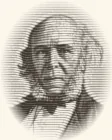 Herbert Spencer1820–1903Social Statics (1851), Pt. II, Ch. 17: The Rights of Children
- TGTemple Grandinborn 1947“Temple Grandin: Society Is Failing Visual Thinkers, and That Hurts Us All” Guest essay, New York Times (January 9, 2023)
A reassuring one for a graduate whose grades were not the highlight.
 Aristotle384–322 BCThe Lives and Opinions of Eminent Philosophers
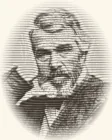 Thomas Carlyle1795–1881The Hero as Man of Letters
It is, Sir, as I have said, a small college. And yet there are those who love it!
 Daniel Webster1782–1852Oral argument before the Supreme Court of the United States, March 10, 1818, in Dartmouth College v. Woodward, 17 U.S. 518 (1918)
Daniel Webster, arguing for Dartmouth College before the Supreme Court in 1818. A good one for anybody’s small college.


Funny, for the graduate who has heard enough advice
For the card from an uncle, a toast among friends, or the first line of a speech that needs a laugh.
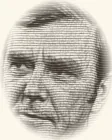 Russell Baker1925–2019“Back to the Dump” (p.414)
A good opening for a commencement speech given by someone old enough to mean it.
Don’t go around saying the world owes you a living. The world owes you nothing. It was here first.
Usually credited to Mark Twain. The humorist Robert J. Burdette said it in a lecture in 1883.
If at first you don’t succeed, try, try again. Then quit. No use being a damn fool about it.
We must be very careful when we give advice to younger people: sometimes they follow it!
EDEdsger W. Dijkstra1930–2002The Humble Programmer (1972)I always pass on good advice. It is the only thing to do with it. It is never of any use to oneself.
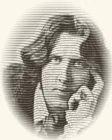 Oscar Wilde1854–1900An Ideal Husband (1895)
In university they don’t tell you that the greater part of the law is learning to tolerate fools.
 Doris Lessing1919–2013Martha Quest (1952), Part III, ch. 2
For a law school graduate.
Even if you are on the right track, you’ll get run over if you just sit there.
Ishmael, in Moby-Dick. For the graduate who learned more at a job than in a classroom.
On failing, which will also happen
The kindest thing to tell a graduate is that getting it wrong is part of it.
Only those who dare to fail greatly can ever achieve greatly.
 Robert F. Kennedy1925–1968Day of Affirmation Address (1966)
Our business in this world is not to succeed, but to continue to fail, in good spirits.
Robert Louis Stevenson1850–1894Complete Works, vol. 26, Reflections and Remarks on Human Life, section 4.The only man who makes no mistakes is the man who never does anything.
The greatest mistake you can make in life is to be continually fearing you will make one.
 Elbert Hubbard1856–1915The Note Book of Elbert Hubbard (1927)
Inside of a ring or out, ain’t nothing wrong with going down. It’s staying down that’s wrong.
 Audre Lorde1934–1992Sister Outsider: Essays and Speeches (1984), “Learning from the 60s”
Success is not final, failure is not fatal: it is the courage to continue that counts.
You will see Churchill’s name on this one. Nobody has found him saying it, so it is filed here without an author.

From famous speeches and poems
Longer passages to read aloud. Most link to the full text.
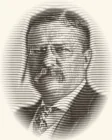 Theodore Roosevelt1858–1919Citizenship in a Republic (1910)
Theodore Roosevelt at the Sorbonne in 1910. Read slowly, it runs about a minute.
 Winston Churchill1874–1965Speech given at Harrow School, Harrow, England, October 29, 1941. Quoted in Churchill by Himself (2008), ed. Langworth, PublicAffairs, 2008, p. 23
Churchill said this to the boys of Harrow School in October 1941, which makes it a real school speech.
Ask not what your country can do for you—ask what you can do for your country.
The last lines of Tennyson’s “Ulysses”.
The closing lines of the same poem.
 Henry Wadsworth Longfellow1807–1882The Ladder of St. Augustine, st. 10.